


AR Music Industry Secrets: How Top Artists Create Immersive Experiences
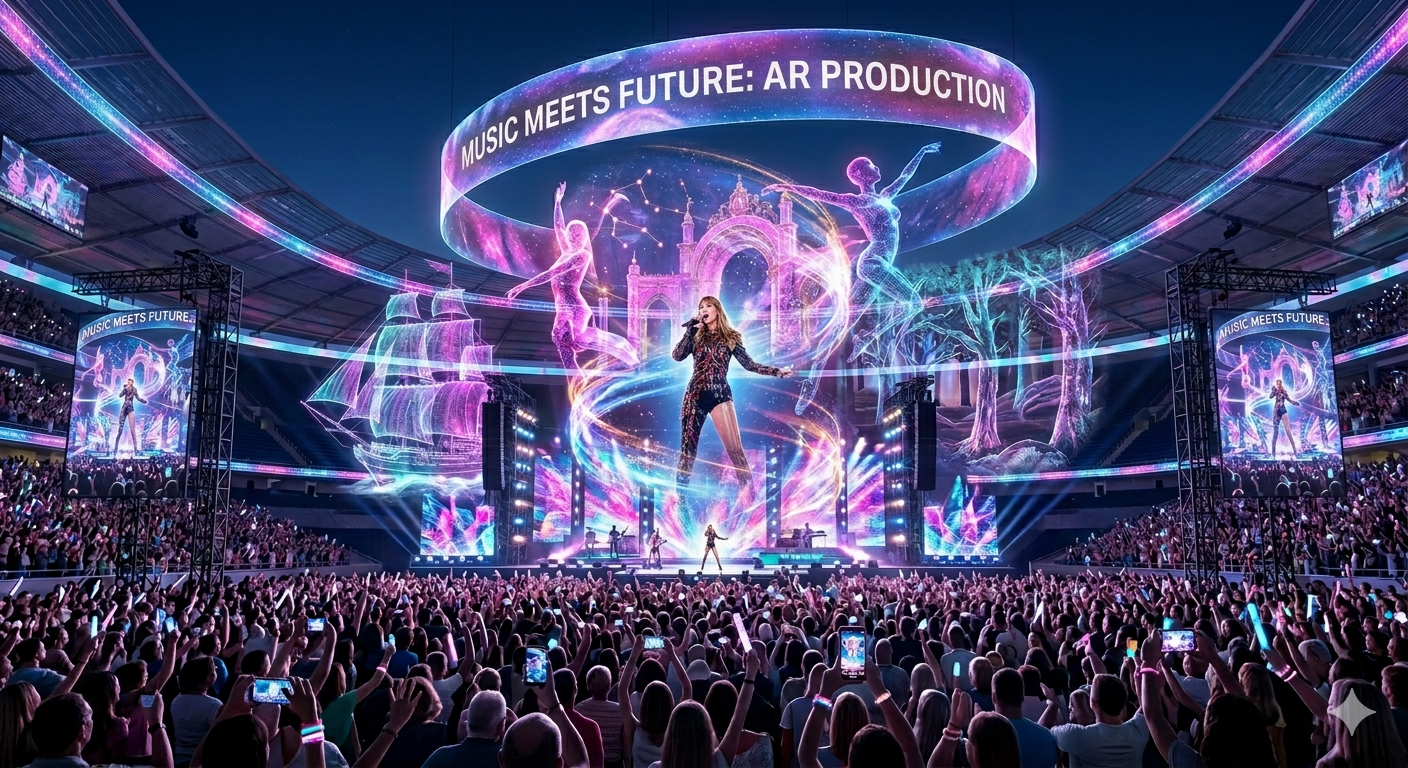
The AR music industry is experiencing explosive growth, with revenue projected to surpass $50 billion in the next three years. Major artists are already capitalizing on this trend. For instance, Coachella transformed one of its stages into a magical AR land in 2019, while Sam Smith created a 3D AR music video for his single “Diamonds” on Spotify.
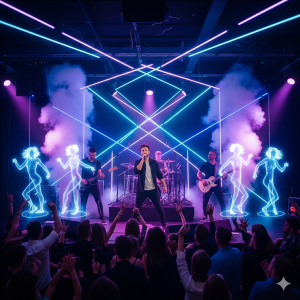
Younger generations are driving this shift, as they are 71% more likely to use AR as a regular part of their life. Understanding what is AR in music industry and how augmented reality and music intersect has become essential for artists looking to create memorable fan experiences. In this guide, we’ll explore how top artists are using AR and show you how to create your own immersive AR music experiences.
Understanding Augmented Reality and Music
Augmented reality and music intersect when digital elements overlay the physical world during performances, album releases, and fan interactions. In reality, AR transforms how audiences perceive sound by adding visual layers that can be viewed through smartphones, tablets, or AR-enabled devices. The ar music industry market reflects this shift, with projections reaching $340.16 billion by 2028.
Gen Z drives much of this adoption. They consume 40 minutes more music daily compared to other demographics, and their preference for technology-enhanced experiences pushes artists toward AR integration. When fans scan album covers or merchandise, they unlock exclusive content like behind-the-scenes footage, artist biographies, and interactive lyrics. Some AR apps enable music remixing or virtual instrument play.
Live performances gain new dimensions through AR filters and holographic elements. U2’s 2018 Experience + Innocence concert displayed Bono in enlarged form above the crowd when fans held up their phones. The virtual band Gorillaz created an AR activation for their album Cracker Island, allowing fans to see 3D characters performing through mobile devices in cities like New York and London. Warren Hue’s AR experience for his album Boy of the Year attracted half a million unique visitors.
Studies show AR experiences can boost event participation by 25%. Platforms like Unity and Unreal provide free software and tutorials for creating these experiences, though smaller festivals still face implementation costs and complexity challenges.
Top Artists Leading the AR Music Revolution
Several pioneers shaped what is ar in music industry before it became mainstream. Initially, Rihanna and David Guetta partnered with Doritos in 2010 to create an AR experience for their track “Who’s That Chick”. John Mayer followed in 2009 with “Heartbreak Warfare,” the first ar music video using marker-based AR that let fans scan and watch him perform in front of them.
Eminem pushed boundaries at Coachella 2018 with his Eminem Augmented app, developed by Drive Studios. His manager Paul Rosenberg explained the concept: “We thought if phones were going to be there and people would take them up in the air and see into them, why don’t we come up with a way to change the way they perceive the show”. The AR experience worked within a hundred yards from the live performance.
Besides concerts, artists applied AR to album launches. The Rolling Stones tagged over 3000 locations globally, including Big Ben and the Empire State Building, with 3D gorillas for their GRRR! Greatest Hits album. Lil Nas X collaborated with Columbia Records to create the Montero Xperience, allowing fans worldwide to immerse themselves in his album’s atmosphere.
Coldplay and BTS used volumetric capture and Unreal Engine for their “My Universe” performance, while their limited album editions featured WebAR experiences with fictional planetary systems.
Creating Your Own AR Music Experience
Building your own AR music experience starts with selecting the right technology stack. Your platform choice significantly impacts development costs. Commercial AR SDKs like Vuforia, 8th Wall, and Wikitude offer monthly licenses ranging from $99 to $1,990. These platforms provide robust capabilities including image recognition and object tracking. In reality, free alternatives like ARKit for iOS and ARCore for Android deliver motion tracking, light estimation, and environmental comprehension without licensing fees.
Open-source SDKs work well for constrained budgets but require additional developer hours to integrate advanced features. Commercial platforms offer comprehensive documentation and technical support, accelerating development timelines. Under those circumstances, the optimal SDK depends on your platform target, feature requirements, and available budget.
AR projects demand significant time investment. Development typically spans 638 to 996 hours, covering app creation, 3D modeling, animations, optimization, and testing. What’s more, smaller tasks like concepting, voiceovers, and bug clearance add to the timeline.
Budget planning proves essential for project success. Create detailed expense categories covering labor, equipment, materials, and marketing. Your budget communicates project scope to potential funders and helps track spending against expectations. Never compromise on quality. AR experiences should amaze audiences and prompt organic social sharing to maximize your investment return.
Conclusion
AR music experiences represent the future of fan engagement, with major artists already proving their value. As you’ve seen here, creating your own immersive experience requires careful platform selection, realistic timeline planning, and adequate budget allocation. Start small if you need to, but focus on delivering quality that encourages fans to share organically. Your investment in AR technology today positions you at the forefront of how audiences will experience music tomorrow.


About Post Author
