


Will AI Replace Musicians? The Surprising Truth About Your Creative Future
The question “will ai replace musicians” hit differently when a fictional AI-generated R&B singer named Xania Monet signed a $3 million record deal. This year marked a turning point as AI-created tracks topped Spotify’s viral chart and Billboard’s country charts, transforming AI music from a novelty into a mainstream force. Ghostwriter’s “Heart On My Sleeve,” featuring AI-generated voices of The Weeknd and Drake, sparked industry-wide debates about the future of creativity.
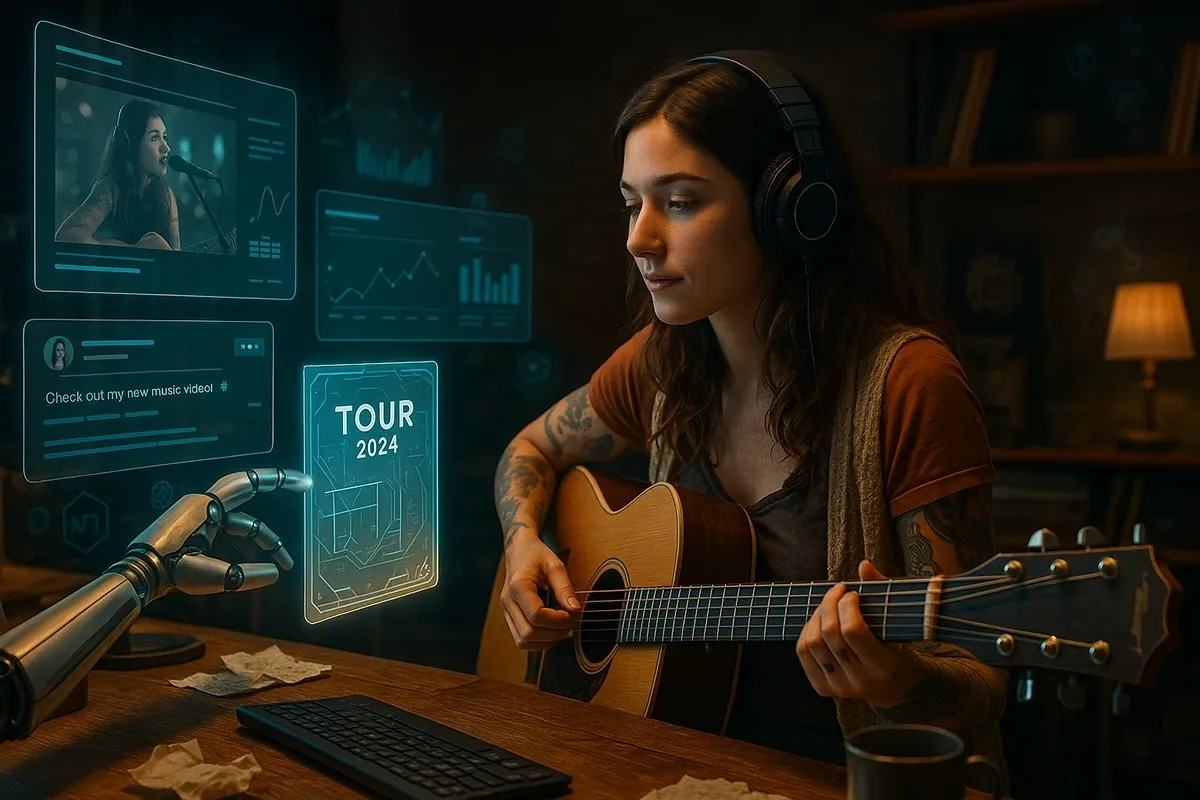
As ai music artists continue to emerge and questions about will ai take over music intensify, I believe understanding the real impact of ai and the music industry is crucial. We’ll explore the actual threats, unexpected opportunities, and how you can adapt to this evolving landscape.
What Happens When Will AI Take Over Music Production
Streaming platforms now receive an unprecedented flood of AI-generated content. Deezer reports that 60,000 fully AI tracks upload to its service daily, representing 39% of total submissions. This tsunami of content has fundamentally altered the music ecosystem, with approximately 100,000 to 150,000 songs hitting major platforms like Spotify and Apple Music every day.
AI music artists have moved beyond experimentation into commercial success. Breaking Rust topped Billboard’s Country Digital Song Sales chart with “Walk My Walk,” accumulating over 3.5 million Spotify streams. The fictional band Velvet Sundown gained 550,000 monthly Spotify listeners, while verified AI artist Aventhis attracted over 1 million monthly listeners. In reality, at least six AI artists charted on Billboard within a six-month period.
Streaming services are scrambling to respond. Deezer’s detection tool identified over 13.4 million AI tracks in 2025 with 99.8% accuracy, finding that up to 85% of AI music streams were fraudulent attempts to steal royalties. Spotify removed 75 million spam tracks in twelve months. Apple Music and Spotify now require transparency tags to disclose AI use in tracks, compositions, artwork, and videos. Bandcamp has banned AI-generated music entirely, while platforms like YouTube Music require disclosure of AI-altered content.
The Real Threats and Opportunities for Musicians
Musicians face a documented financial threat that goes beyond platform changes. Workers in the music sector will lose 24% of their income to AI by 2028, as generative AI music captures 20% of traditional streaming revenues and 60% of music library revenues. AI developers stand to gain €4 billion while creators lose equivalent value through unlicensed reproduction.
The copyright battlefield has intensified. Universal, Sony, and Warner sued AI generators Suno and Udio for training on copyrighted works without authorization, seeking $150,000 per infringement. Nevertheless, settlements emerged by late 2025, with Udio reaching licensing agreements with UMG and WMG. These deals established precedent for compensatory frameworks where AI companies pay fees to use catalog works for training.
Job displacement targets specific roles. Over 50% of survey participants expect AI to displace sound designers within three years, with 40% predicting losses for music editors and audio technicians. Routine tasks like loop selection, mixing automation, and jingle composition face the highest automation risk.
Equally significant are the opportunities. AI removes industry middlemen who controlled access and slowed artist development. Tools like ChatGPT handle marketing and press releases, while AI mixing assistants automate technical drudgery. In contrast to replacement fears, musicians using AI tools earn approximately 15% more than those using conventional methods, as AI handles pattern recognition while human artists provide emotional intelligence and cultural context.

How Musicians Can Adapt to AI in the Music Industry
Shifting strategy matters more than fighting the inevitable. Musicians who diversify beyond Spotify gain immediate financial advantages. Bandcamp pays 85-90% of revenue directly to artists, approximately ten times more per transaction than streaming platforms. Tidal offers $0.01 per stream, triple Spotify’s rate, while Qobuz pays $0.02 per stream. Building presence across these platforms creates multiple income streams resistant to AI flooding.
Human certification has emerged as market differentiation. Services like HumanMade Certified verify tracks as fundamentally human-authored for £3 per track, creating transparent authenticity markers. Similarly, VerifiedHuman offers annual certification at $34.95, allowing musicians to display verified badges across promotional materials. In parallel, 97% of listeners cannot reliably distinguish AI from human music, making certification a competitive necessity rather than optional branding.
Marketing automation levels the playing field without sacrificing authenticity. SongTools delivered 70% client retention rates within 30 days of integration, while 80% of users saw noticeable monthly listenership increases. Tools like Symphony, Beacons.ai, and Hypeddit automate ad campaigns, email collection, and fan engagement. Furthermore, direct-to-fan models through Patreon, email lists, and exclusive content transform casual listeners into superfans. Research shows superfans comprise 20% of listeners but spend 66% more on live events and 105% more on physical products.
Conclusion
AI won’t replace musicians, but it will reshape how we work and earn. The artists who thrive will diversify income streams, obtain human certification, and automate repetitive tasks while focusing on authentic connection. Indeed, musicians using AI tools already earn 15% more than those resisting change. Your creative future depends on adaptation, not resistance. Embrace the tools that amplify your human artistry rather than competing against machines at their own game.


About Post Author
